


A Deep Dive into the Diving Industry

Mark Harris
Manager - Technical Sales
June 4, 2026
8 min read
How the offshore industry learned to work without divers
Sixty years ago, offshore construction and maintenance were largely a diving industry. Depth ranges were manageable, dive teams were large, and the economics worked. Divers had something no machine has matched since: human dexterity, human judgement, and the ability to improvise underwater when a job didn’t go to plan.
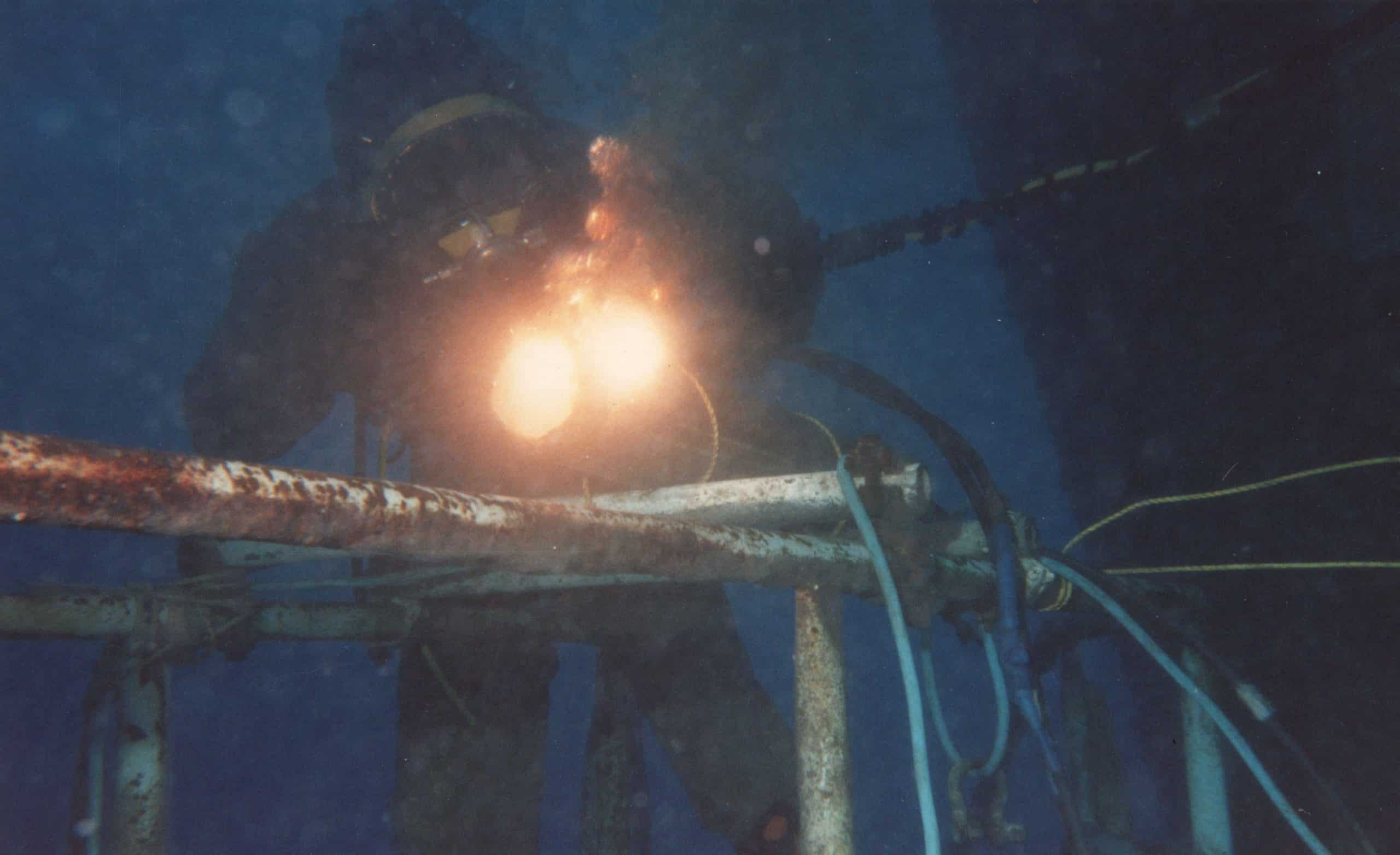
When divers ruled the back deck
Back in 1980, a vessel doing 5,000 dives a year in Brunei wasn’t unusual. Two hundred platforms were operating in the region. Operations ran on the back deck in shorts and flip flops, with a ghetto blaster and no hard hat in sight. It wasn’t reckless. The responsibility sat squarely with the people doing the work, and they took it seriously.
Then Piper Alpha happened. The 1988 North Sea disaster killed 167 people and changed everything overnight. Overalls, hard hat, boots, gloves, safety glasses. No exceptions. More importantly, the industry started asking a harder question: how do we remove people from hazardous environments entirely?
The shift to ROVs
The answer was the Remotely Operated Vehicle. But getting there wasn’t an easy step change. Companies experimented with one-atmosphere diving technology such as converted diving bells with external manipulators and maned 1 atmosphere hard shell diving suits. The idea was to eliminate decompression risk. It wasn’t always successful.
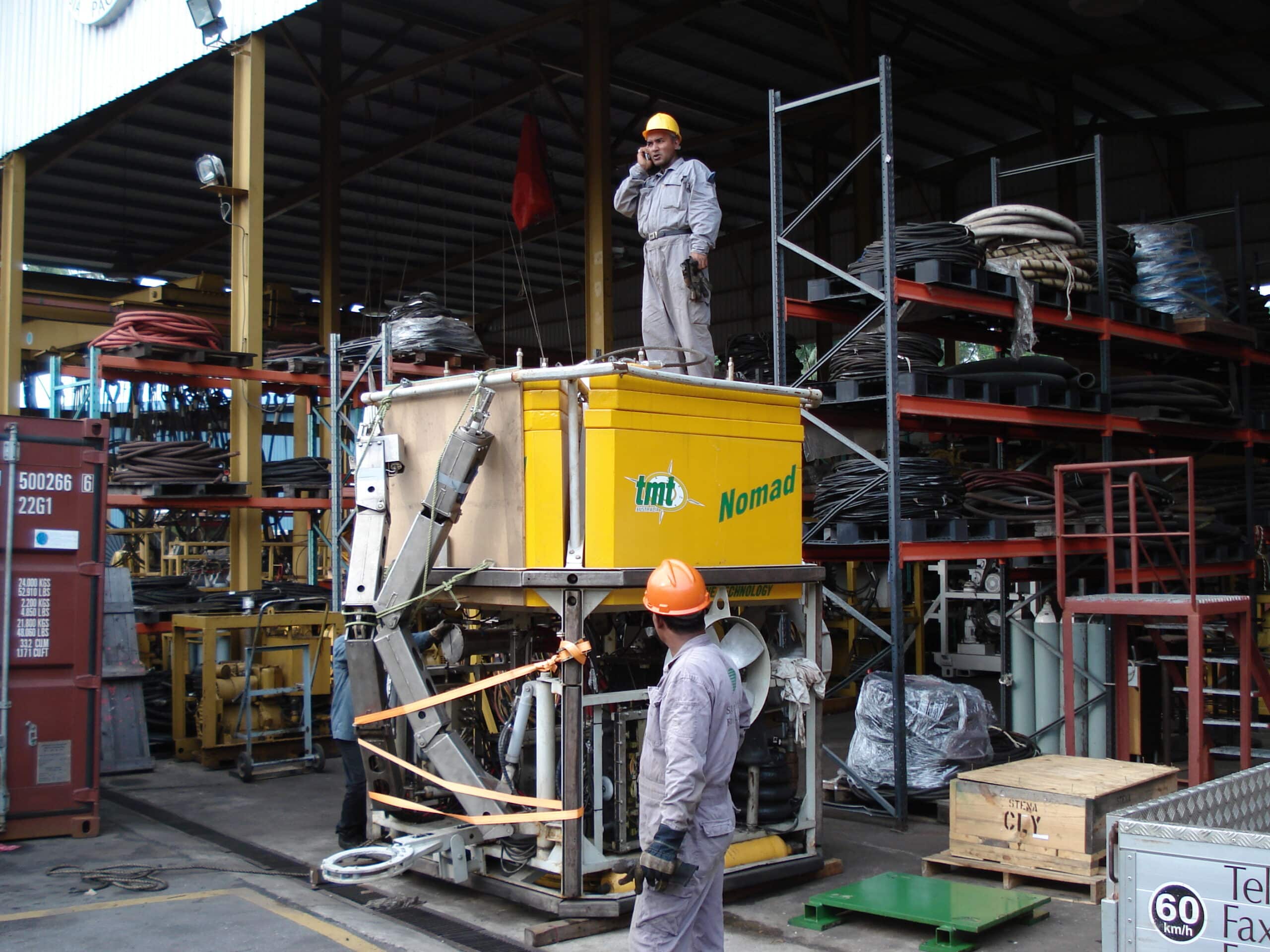
Image: Archival footage of TMT’S early years.
The two standards everyone needs to know
ROVs solved the access problem. But they created a new one: consistency. If every subsea operator designed their own interfaces, the next company couldn’t connect. At the extreme end, that means a submarine rescue vehicle that can’t lock onto a downed submarine because the flange diameter is different.
"If you don't know the language, you will be identified straight away, especially by the old timers, and they will pick you to pieces."
- Mark Harris, TMT
For anyone entering this industry, or anyone who works with subsea tooling in any capacity, there are two standards worth knowing from day one.
- ISO 13628-8 covers ROV interfaces in oil field systems. Metric, European-centric, and the reference point most international operators use when specifying subsea tooling.
- API 17H is the American Petroleum Institute’s equivalent. Imperial, American-centric. US oil majors will reference this document.
In practice, when you convert the measurements, the interface geometries largely align. An ISO-specified product will generally interface with an API-specified product once the conversion is accounted for. But knowing which standard applies to a given job is the starting point for everything: tool dimensions, torque ranges, interface sizes and pressure ratings.
Why this matters now
A submarine rescue vehicle that can’t lock onto a downed submarine because the interface diameter is different is not a rescue vehicle. The same logic applies across every connection and every tool deployed subsea. Consistency isn’t procedural, it’s the difference between a system that works and one that doesn’t.
Get the standard confirmed, and everything else has a foundation.
Find out how TMT can engineer the solutions & tools you need

We’re always looking for more talented team members who can help us shape the future of subsea engineering.
TMT © 2026 | Sitemap | Terms & Conditions | Privacy Policy
Managed by 3BY2